

A British pub looks like the simplest place in the world to spend an evening. You walk in, you get a drink, you sit down. And yet most first-timers end up standing in the wrong spot, ordering in the wrong order, or quietly panicking about who owes what to whom. Nobody will scold you for it. But you will feel the friction, and you will spend the first hour working out the rules instead of enjoying yourself.
Almost all of it comes down to a few habits that regulars picked up years ago and never think about. Learn them before you push the door open and the pub turns into what it should be: a warm room, a good drink, no complications.
Waiting to Be Seated at a Pub With No Host
This is the classic first mistake. You walk in, hover near the door, and wait for someone to show you to a table. Nobody comes. That's not neglect; it's how pubs work.
In most pubs, you go straight to the bar and order. Then you take your drink to any free table, or stand if there isn't one. There's no sequence of being greeted, seated and served unless you're in a food-led pub that has adopted restaurant habits — and if that's the case, there will usually be a sign by the door saying to wait. If you see such a sign, obey it. If you don't, walk in like you own the place.
One useful detail: if you're planning to eat, note the number on your table before you go to the bar. Many pubs ask for it when you order food.
The Queue That Isn't a Queue
Britain queues for everything except, apparently, the bar. There is no line. Instead, the staff serve by eye, picking out whoever looks ready and next. New visitors who form an orderly queue across the room are being polite in a way that confuses everyone and often means they get served last.
What to do instead:
- Stand at the bar, not three feet back from it, and leave a little space beside you.
- Make eye contact with a member of staff. That's your place in the invisible queue.
- Have your order ready in your head. "I was here first" doesn't work; "I know what I want" does.
- If someone nods at you and says "you're next", accept it. It's not a trap.
- Don't click your fingers, whistle, or wave notes in the air. Staff notice and remember.
Ordering Like You Mean It
Pub drinks have their own vocabulary, and getting it slightly wrong is the fastest way to look new. The good news is that bar staff are patient and genuinely don't mind questions — a tourist who asks what's on cask is far less trouble than one who orders a complicated cocktail in a backstreet boozer.
A few reliable habits:
- Lead with the size, then the drink: "A pint of lager, please," or "A half of that bitter."
- If you don't know the brands, ask. "What lagers have you got?" is a perfectly normal question.
- Curious about a cask ale? Ask for a small taste. Many pubs will pour you a mouthful.
- Order for the whole group in one go, not one person at a time. It's faster and the staff will thank you.
- Order drinks first, food second, even if you're eating at the bar.
On payment: cards are widely accepted now, but smaller pubs and back-room bars sometimes prefer cash, so it's worth carrying a little. Decide what you want before you reach the bar. "Um, actually, make that..." while the pump is halfway down is nobody's favourite moment.
The Round: Britain's Most Binding Social Contract
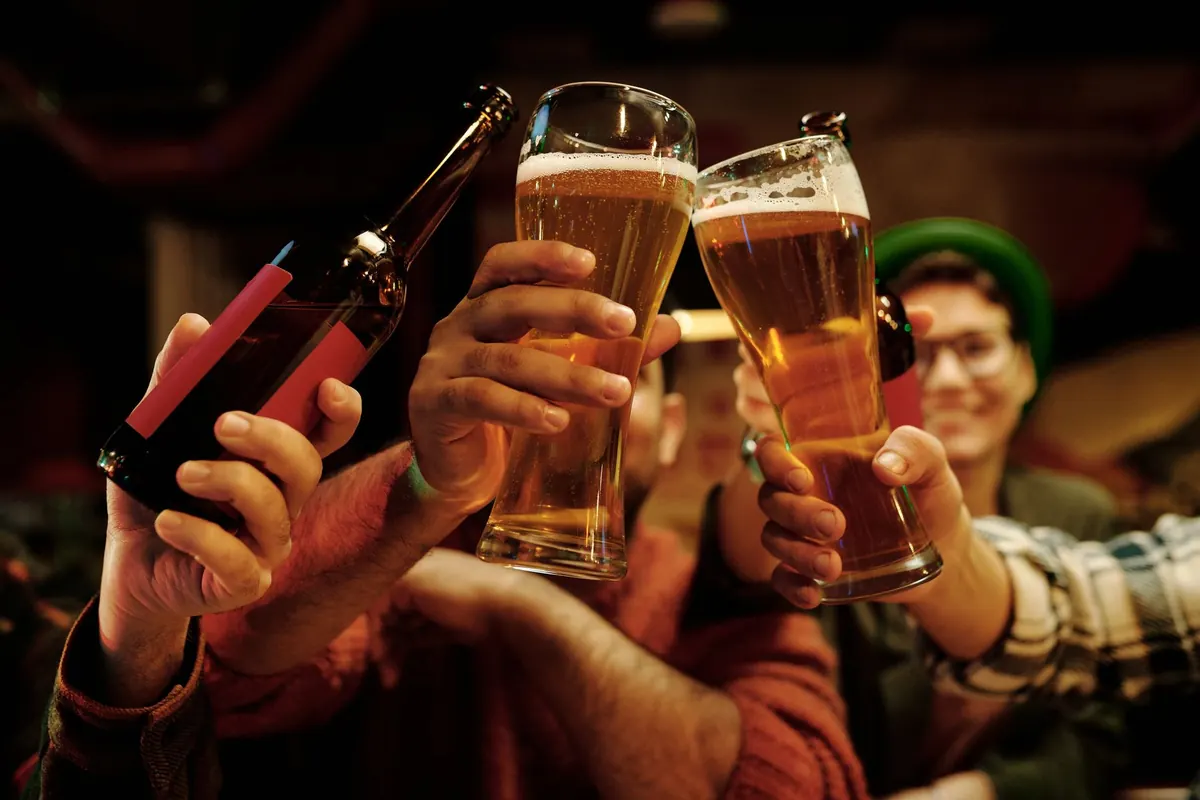
If you're with a group, someone will offer to get a round. Say yes, and you've entered an agreement. When their glasses are empty, you're expected to get the next one. This continues for the evening, roughly evenly.
The mistake isn't buying a round. It's disappearing when it's your turn, or leaving after one drink without settling up. That's the behaviour that earns the label nobody wants.
Two sensible exceptions. If you're drinking slowly or sticking to soft drinks, say so early — "I'll get my own, I'm on lime and soda tonight" — and nobody will mind. And if a stranger buys you a drink, accept graciously and offer the next; decline politely if you'd rather not start a cycle you can't finish.
Tipping, Tabs and "One for Yourself"
Pubs aren't restaurants, and the tipping rules are different. Ordering at the bar, you are not expected to tip. If you've had good service, rounding up to the nearest pound is generous enough, and nobody will count it.
The traditional gesture, if you want to mark good service, is to say "and one for yourself" as you pay. The bartender will either add a small amount to the bill or drop it into a glass behind the bar for the staff. Say it once, not with every drink.
If you're running a tab, ask at the bar whether they'll keep one for you — bigger pubs usually will. And if you eat at a table and a bill arrives, a modest tip is a reasonable gesture for good service, much as you would in any restaurant.
Where You Sit, and Where You Don't
Pubs have a soft geography that isn't written down. A few things worth remembering:
- Reserved signs are real. Darts teams, quiz nights and Sunday roasts genuinely do book tables.
- Don't drag chairs across the room from someone else's table. Ask first, or stand.
- Seats at the bar are often the preserve of regulars, especially early evening. Take one, but move cheerfully if asked.
- Dogs are welcome in many pubs and banned in others. Ask before assuming, even if the dog looks delighted to be there.
- Children are usually welcome earlier in the day, with restrictions later. Ask at the bar rather than guessing.
None of this is enforced with a rulebook. It's just courteous behaviour in a shared room, and it's noticed.
Last Orders, the Bell, and Going Home
At some point in the evening, a bell rings or someone calls out that it's last orders. That means what it says: order now, because the bar is closing. You'll then get a short drinking-up period to finish what's in your glass. It isn't an invitation to order another round, and it isn't the moment to start a long story.
Closing times vary by pub, by day, and by whether there's a big match on. If you're planning the end of your night around a particular pub, check its hours earlier rather than assuming.
Your First-Visit Checklist
- Walk in and go to the bar. Only wait at the door if a sign tells you to.
- Find your place in the invisible queue with eye contact, not a line.
- Order the whole round at once, size first, drink second.
- Offer to get the next round, or say early that you're buying your own.
- Ask when you're unsure — staff would far rather explain than watch you struggle.
- Say thanks, finish your drink when the bell goes, and head out the door with a "cheers" on the way.
That's the whole system. Get those few things right and you'll stop being a visitor and start being someone the barman nods at. Which, in a British pub, is about as warm a welcome as you'll get.
Photo: Ian / Pexels