

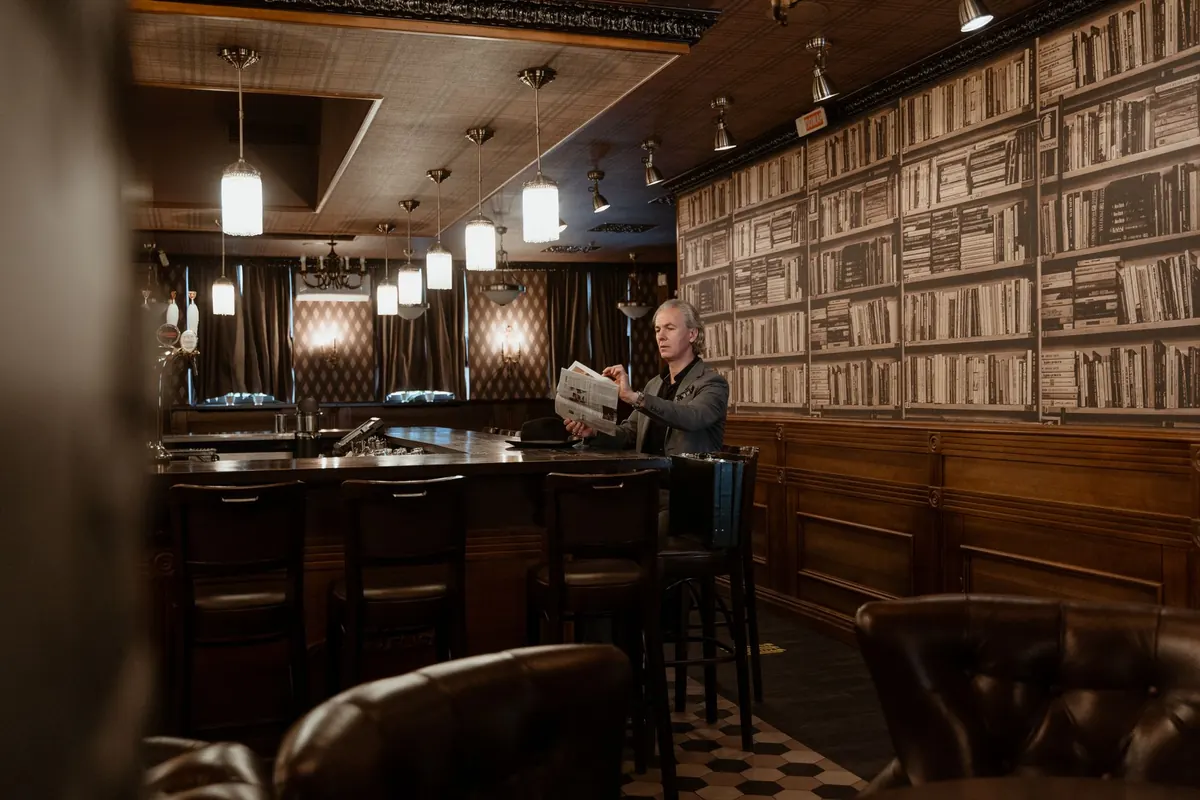
You can learn a lot about a pub in the time it takes your eyes to adjust. The door swings shut, the noise settles, and somewhere between the smell of the carpet and the way the staff glance up, a verdict starts forming. Most drinkers make that judgement on instinct. It is worth making it on purpose.
A well-run pub is rarely a matter of money. It is a matter of attention. Beer is a fragile, perishable product handled by people who may or may not care, and almost everything you can see in the first few minutes is a proxy for the things you cannot see: the cellar temperature, the line-cleaning rota, the shift pattern that allows somebody twenty minutes to polish glasses before the six o'clock rush. Get those right and the room tends to take care of itself. Get them wrong and no amount of copper piping or chalkboard lettering will cover it.
What follows is a working checklist: twelve signals, read in the first few minutes, that separate a pub run with care from one coasting on its postcode. Two come from the doorway, four from the bar, six from the glass. None of it needs a clipboard, and all of it helps you decide whether to order a round or keep walking.
The First Ten Seconds
Before you have spoken to anybody, the doorway has already told you two things. Both are free. Both are difficult to fake.
- The smell at the threshold. Not the air freshener — the smell underneath it. A well-kept pub smells of beer, wood, warm dust and yesterday's crisps. What you are sniffing for is absence: no damp carpet, no sour mop bucket, no dead, conditioned nothing. Air that smells of nothing at all usually means a room with very little turnover. Air that smells faintly of vinegar means the cellar or the lines need work, and it will turn up in your glass within ten minutes.
- Whether anybody notices you. Not a fanfare — the regulars ignoring you is a compliment, and a good sign in itself. But somebody behind the bar should register the door. Staff who look up are staff who are watching the room, and a room being watched is a room where tables get cleared, glasses get collected and pumps get changed before they blow. In a pub where nobody lifts their head, you are about to serve yourself, metaphorically at least.
At the Bar
The bar is the engine room. Four things are visible from the customer's side of it, and all four are about discipline rather than décor.
- The state of the bar top. Dry where it should be dry, tidy where it must be tidy. If there are six dead glasses stacked at the corner, a puddle of something pale spreading towards the till and one sad cloth that hasn't been wrung out since lunchtime, the cellar is probably in a similar condition. Watch for a bar towel actually being used — that is somebody working rather than waiting.
- The hand pumps. Check the clips. If four of the six engines are turned around, that is honest and normal, particularly early in the week: a pub selling through fewer lines is a pub that isn't going to pour you three-week-old beer. Be more suspicious of twelve pumps all going at once, all of them middling and none of them moving.
- Whether the staff can answer a question. Ask what's drinking well. A good answer is specific — the pale on the left came on today, or the stout is on its last barrel, I'd go for the bitter. "It's all nice" is not knowledge. It is a shrug with eye contact.
- The glassware and the flow. Glasses stacked clean and unchipped, the right shape for the right beer, and ideally polished rather than still wet from the washer. Then the till: does the queue move? A bar that can serve four people in the time another serves one has been set up properly before the rush, which is the entire job in one sentence.
In the Glass
This is where the pub either pays for its upkeep or hands you the evidence. Six checks, and you can run all of them while the first mouthful is still settling.
- The head. Right for the style, tight, and still there when you sit down. A cask pint should hold a modest collar of foam. A collapsing inch of bubbles that dies before you reach the table means the beer, the glass or the pour is wrong, and usually more than one of them.
- The temperature. Cellar cool for cask — a whisker under room temperature, not chilled — and properly cold for lager. Bitter served at two degrees is bitter being hidden. If it numbs your tongue, ask yourself what the cold is covering.
- The pour. You can watch this for free, and you should. A proper cask pour is unhurried: tilt, settle, top up, a moment's patience. Slopping a pint in from a foot above the glass means nobody in that building intends to taste it before you do.
- The glass itself. Hold it up to the light. Lipstick, a lingering detergent film or a ring of bubbles clinging to the inside wall — that film kills the head and flattens the flavour. What you want is a glass that smells of nothing at all, including the last person's drink.
- The first mouthful. Clear, lively, fresh and tasting of what the clip promised. Butterscotch, cardboard, wet paper or a vinegar sharpness are not character. They are a beer that has gone off, or lines that need cleaning, or both.
- The second round. Identical to the first, and identical again the following week. Consistency is the hardest thing in the trade and the surest sign that whoever runs the place is in it for the long haul rather than the weekend.
Three Things That Don't Tell You Much
Some signals get read as quality when they are really just signals. Worth discounting:
- A packed room. A busy pub may simply be the only pub. Full tables tell you about geography and habit, not about the state of the cellar.
- A very long beer list. Twelve cask lines in a village with forty regulars is not ambition, it is slow-moving stock. A short list that rotates is almost always the better bet.
- Expensive fittings. Copper, candles, mismatched armchairs and hand-painted signage cost money. Money is not care, and care is what you are actually buying.
What to Do With a Bad Pint
The checklist is not just for deciding where to drink. It is also for deciding what to do when a pub fails the test after you've paid.
- Take it back immediately, not at the end of the evening. A pint you have half-drunk is a much harder conversation.
- Speak to the person who poured it if you can. They know the barrel, and they are the one who can turn the clip around.
- Be specific and be kind. "This tastes of vinegar" or "this is warm" gives them something to act on. "This is rubbish" gives them a customer to manage.
- Ask for a swap rather than a refund. Almost every well-run pub will pour you something else without argument — and a good one will thank you, because you have just told them a line is off before twenty other people found out the slow way.
- If they refuse, you have your answer. Finish nothing, pay, and don't come back. A pub that argues about a bad pint has told you more in thirty seconds than the décor managed in thirty minutes.
The Short Version
None of this is a guarantee. Good pubs have bad nights, bad barrels and new starters on the pumps, and a single flat pint on a Tuesday is not a character reference. But the signals cluster. A pub that smells right, watches its door, minds its bar top and pours a clean, consistent glass is a pub where somebody is paying attention when nobody is looking — and that is the whole of it.
The best sign of a well-run pub is that nobody is making a fuss. The beer arrives on time, at the right temperature, in a clean glass, and the person who poured it looks like they would notice if it didn't.
Photo: MART PRODUCTION / Pexels