


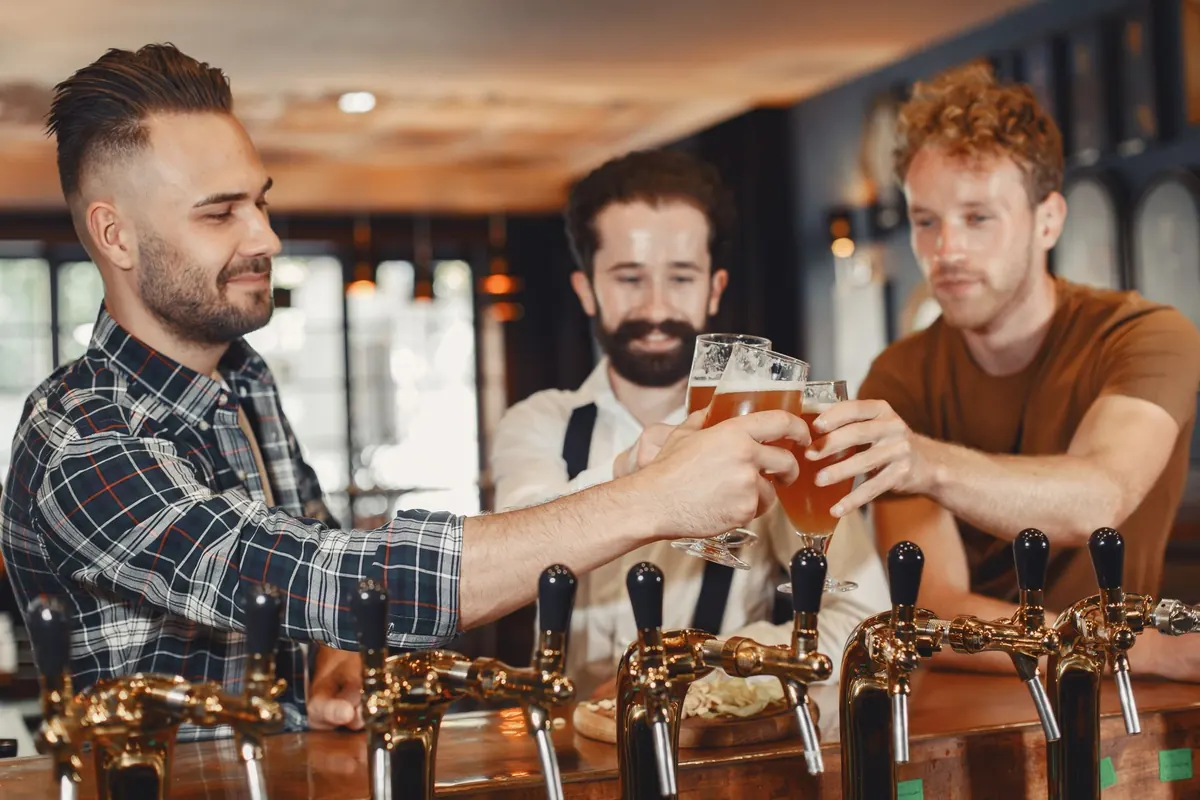
Five people, four pints and a lime and soda. Then the quiet moment when the last glass empties and everyone does the same small calculation: whose turn is it? Buying a round is not complicated, but it is easy to get subtly wrong — to buy too early, too late, or for the wrong people.
None of it is written down anywhere. That is exactly why it matters.
The One Rule That Explains Everything
A round is a rotating loan, not a gift. You buy for the group now; someone buys for you later. The value roughly evens out across the evening, and nobody is keeping a tally in a notebook. They are keeping one in their head, though. That is the whole system.
From that single idea, everything else follows. Buy drinks of a similar standard to what you have been drinking. Buy for the people who bought for you. And buy before the glasses are empty, because a round that arrives when everyone is parched is a round that lands properly.
Timing: When to Offer, When to Wait
The cue to get up is simple: your glass is nearly finished and so are everyone else's. Not when you have just been handed a fresh pint while three people stare at dry glasses. Not after the pub has called last orders and the bar is four deep.
Go early. If you can see the bar filling up, order before it does. Carrying four pints through a crowd is a skill, but avoiding the crowd entirely is a strategy.
- Offer rather than wait to be asked. "Same again?" is the entire script.
- If you are the first to finish, that is your prompt — within reason.
- If you have just joined the group, you are usually in the next round, not this one. Nobody expects you to fund a table you walked up to ninety seconds ago.
- If you are leaving within the hour, say so early and buy your round before you go.
Taking the Order Without Taking Over
Start with "same again?" for the table, then ask the one person who has changed their mind. A pub round goes wrong when the buyer guesses. Note the details: lime rather than lemon, no ice, a half instead of a pint, the ale rather than the lager. These are not fussiness. They are the drink someone actually wants.
Take the empties back with you if you can carry them. Use a tray when the pub has one. And if you are buying for six people, take someone with you — two people carrying three pints each beats one person making two trips and losing their seat.
Buying for Non-Drinkers
A non-drinker is not a discount. If someone at the table is on tonic, an alcohol-free beer, a coffee or a lime and soda, buy them what they are actually drinking and refill it as part of the round. Do not comment on it, tease them about it, or ask why. Nobody owes the table an explanation for what is in their glass.
The same works in reverse. If the non-drinker offers to get a round in, accept it and say thanks. Plenty of people buy rounds all evening while drinking nothing stronger than soda water, and that is a generous habit, not a strange one.
Large Groups and the Money Problem
Rounds get expensive fast once you pass five or six people. A round for eight can cost more than a week of lunches, and somebody at the table is quietly doing sums. Handle it before it becomes awkward.
- Split into two smaller rounds rather than one enormous one.
- Pair up: "we'll get these two rounds together."
- Agree at the start that everyone buys their own tonight. Perfectly acceptable, especially with mixed budgets.
- Never let one person end up three rounds down. If you notice it, fix it.
- If you are leaving early, buy your round before you go, or hand someone cash quietly on the way out.
The Awkward Bits
Someone orders a round of shots nobody wanted. Drink it or don't — but buy the next round at normal strength, and do not announce that you are "recovering" the cost.
Money is tight this month. Say so plainly and buy your own drinks, or buy a round of halves instead of pints. A round of halves is still a round. What you must never do is buy a round and then mention the price, or stand at the bar waiting to be reimbursed for someone's stout.
If you have been bought for and you leave before your turn, settle it next time you see them. Nobody will chase you, and that is precisely why you should remember.
A Quick Checklist Before You Reach the Bar
- Are at least two other glasses nearly empty?
- Do you know what everyone is drinking — including the person on tonic?
- Can you carry it, or should you take someone with you?
- Are you staying long enough to receive a round back?
- Can you afford it without resenting anyone at the table?
The Round Is a Small Kindness
Buying a round is not about alcohol. It is about turn-taking, attention, and the modest pleasure of someone remembering that you take lime, not lemon. Get the turns roughly right, buy a standard you can afford, and be as relaxed about the person drinking tonic as the person drinking stout.
If you are not drinking at all, you are still a full member of the round — a fact worth saying out loud if anyone pushes. And if drinking is affecting your health, your sleep or your money, talk to a doctor or another qualified professional rather than a landlord with a cloth over his shoulder.
Then get the next one in before the glasses are empty. Someone will do the same for you.
Photo: Gustavo Fring / Pexels