

The door swings open and you're standing in a working factory with a bar in the middle of it. Stainless tanks the size of delivery vans. A hiss of steam from somewhere behind a wall. Someone rolls a pallet jack past a stack of empty growlers. On the chalkboard: twelve beers, and you recognize maybe two of the names.
A taproom isn't quite a bar and isn't quite a restaurant, which is where first-timers tend to stumble. The rules are unwritten and mostly about consideration. Learn a few of them and the visit gets easier — for you, for the people behind the bar, and for the regulars who'll be glad you came.
What to Expect When You Walk In
Most taprooms are counter service. You order at the bar, carry your own drinks, and return your glass when you're finished. Full table service is the exception, usually at brewpubs with a kitchen.
Take a beat before you join the line and read the board. If there's a host stand, use it. If it's seat-yourself and the room is packed, it's fine to claim a table before ordering — just don't send one person to guard a six-top while the rest of your group is still circling for parking.
Three things not to do: don't reach over the bar, don't wander into the production area because a door was open, and don't assume the bartender can leave the counter to check on your table. If you want a running tab, ask how they handle it; some places keep a card behind the bar, others close out every round. Kids, dogs, and outside food all vary by brewery and often by local licensing, so check the website or ask at the door rather than guessing.
Ordering a Flight Without Guessing
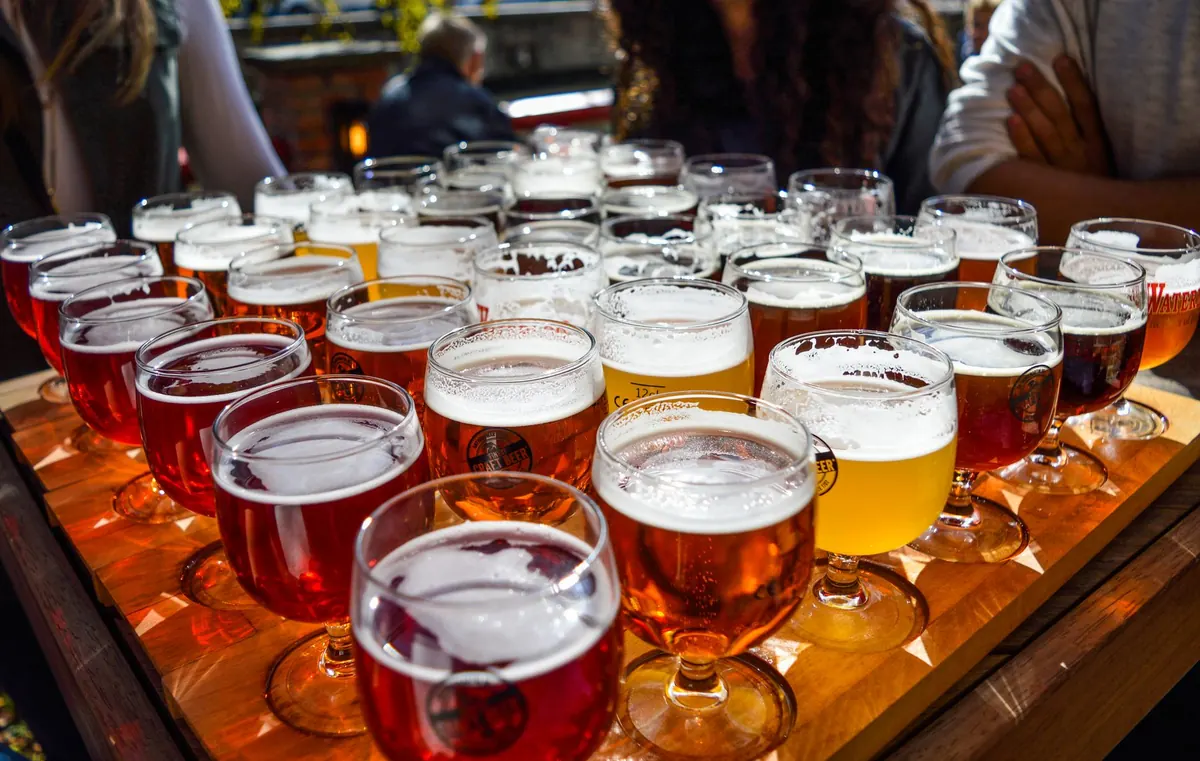
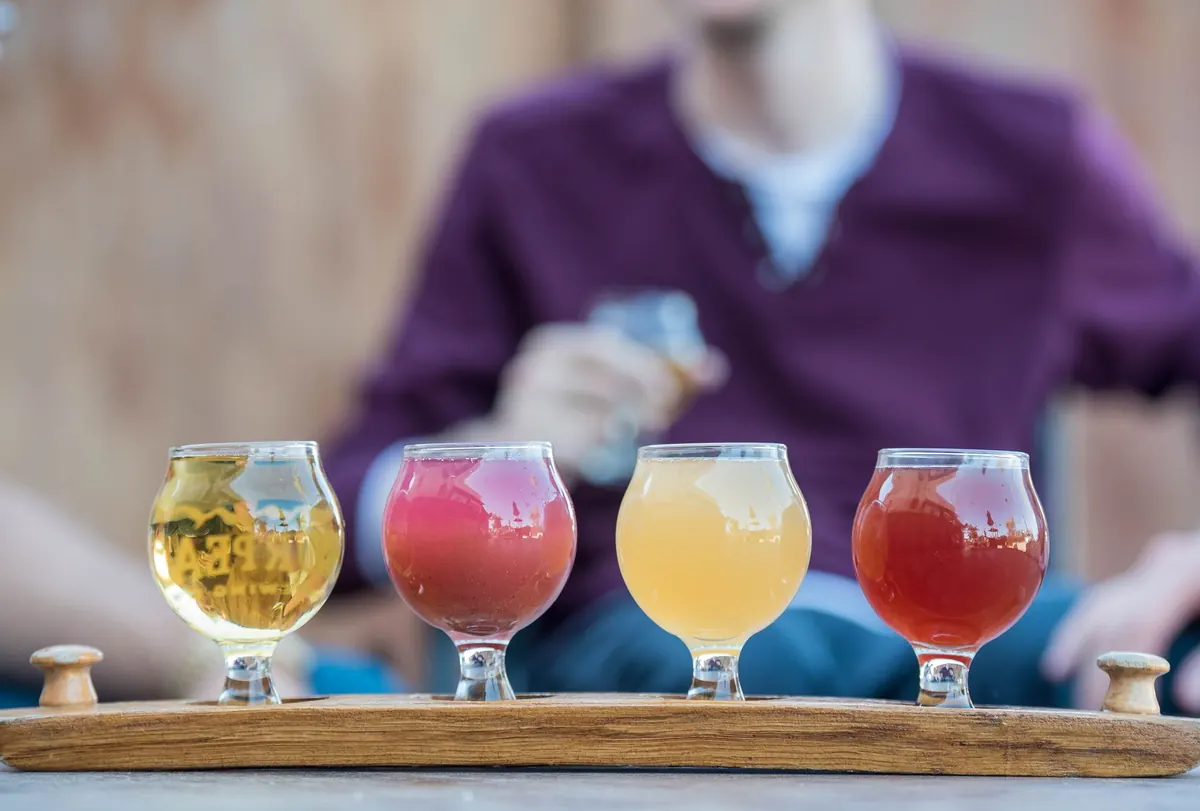
A flight is usually four small pours, somewhere in the four-to-five-ounce range, sometimes served on a paddle or a branded board. It's the best deal in the building for a first visit, because it lets you taste across the board without committing to a full pint of something you'll regret.
Build it with a plan. Pick one beer you already know you like, one style you've heard of but never tried, and two you can't pronounce. Ask the bartender what's freshest — a keg tapped three days ago tastes noticeably brighter than one that's been on for a month, and staff usually know the difference.
A flight that teaches you something
- Start with the lightest beer on the board — a pilsner, a kolsch, a wheat.
- Move to something hop-forward or amber in the middle.
- Finish with the dark, strong, or barrel-aged pour.
- Put the one you're most excited about second or third, when your palate is still awake.
Two practical notes. Many breweries won't include high-ABV or barrel-aged beers in a flight, and some cap flights at a certain strength — ask before you build. And sharing is completely normal. One flight between two people is a pleasant afternoon; two flights each is a nap in a parking lot.
Tasting Without the Snobbery
You don't need vocabulary. Smell the beer first, take a small sip, and let it sit for a second before you swallow. Cold mutes flavor, so if something tastes thin, give it a few minutes to warm. Water between pours resets your palate; plain crackers do it faster if the bar has a bowl out.
If you want to remember what you drank, type three words into your phone per beer. "Grapefruit, dry, crisp." "Smells like fresh bread." That's enough — more useful, honestly, than borrowed tasting notes about stone fruit and leather. If you genuinely dislike a pour, leaving it is fine. Ask where the dump bucket is rather than pouring anything back into a glass or, worse, near the taps.
Tipping, Tabs and Other Money Matters
Taproom tipping follows bar logic more than restaurant logic. If you're paying per round, a dollar or two per drink is a reasonable habit. If you're running a tab, treat the tip like you would at any bar and adjust for how much attention you needed. Many card readers now offer preset percentages; if you'd rather leave cash, most small breweries are glad of it, since it reaches staff quickly.
If the tour was free, the thank-you is usually a beer, a glass, or a four-pack on the way out. Tipping customs differ by city and country, and no one behind the bar expects you to read minds — if you're unsure, ask, or check the local norm before you go.
Questions Worth Asking
Brewery staff field the same five questions all day. A slightly better one will get you a real conversation.
- What's the freshest thing on tap right now?
- What would you drink if your shift ended in five minutes?
- Is this a house yeast, or did you bring something in for it?
- How long did the barrel-aged one sit, and in what kind of barrel?
- Do you pour a taste if I'm stuck between two?
- How did this beer get its name?
Skip the ones that put staff in an awkward spot: pushing past the sample policy, asking for free pours, or grilling a slammed bartender about exact grist ratios during a rush. Save the technical questions for a quiet moment or for the tour, when the person answering actually has time. And if you don't like something, saying so politely is fine — comparing it unfavorably to another brewery within earshot is not.
On the Tour: Shoes, Hoses and Hands to Yourself
Wear closed-toe shoes. Brewery floors are wet, slick, and often covered in a fine layer of something sticky. Sandals and heels are a bad idea, and some places will hand you a pair of loaner boots or turn you away.
Stay with the group and behind the line. Production areas are full of hot pipes, pressurized tanks, and hoses underfoot, and a working brewer may be moving through with something heavy. Don't touch valves, gauges, or anything strapped to a wall, and don't duck into the packaging area for a photo. Listen for the guide's pauses and ask your questions then. If samples are part of the tour, drink the one you're handed rather than asking for refills. Ask before bringing kids or dogs, and note that glass is usually not welcome on the production floor for good reason.
Leaving Well
Last call is last call. Finish what you have, return your glass to wherever the empties go, and wipe up a spill if you made one. Thank the staff on your way out, and if a beer really landed, buy a four-pack or a branded glass — that's what keeps small breweries pouring.
Sort your ride before the final flight, not after. A designated driver, a rideshare, or a walk home beats a clever plan made at midnight.
That's the whole etiquette, really: read the room, ask before assuming, and treat the people making the beer like they're hosting you in their workshop. They are.
Photo: ELEVATE / Pexels