

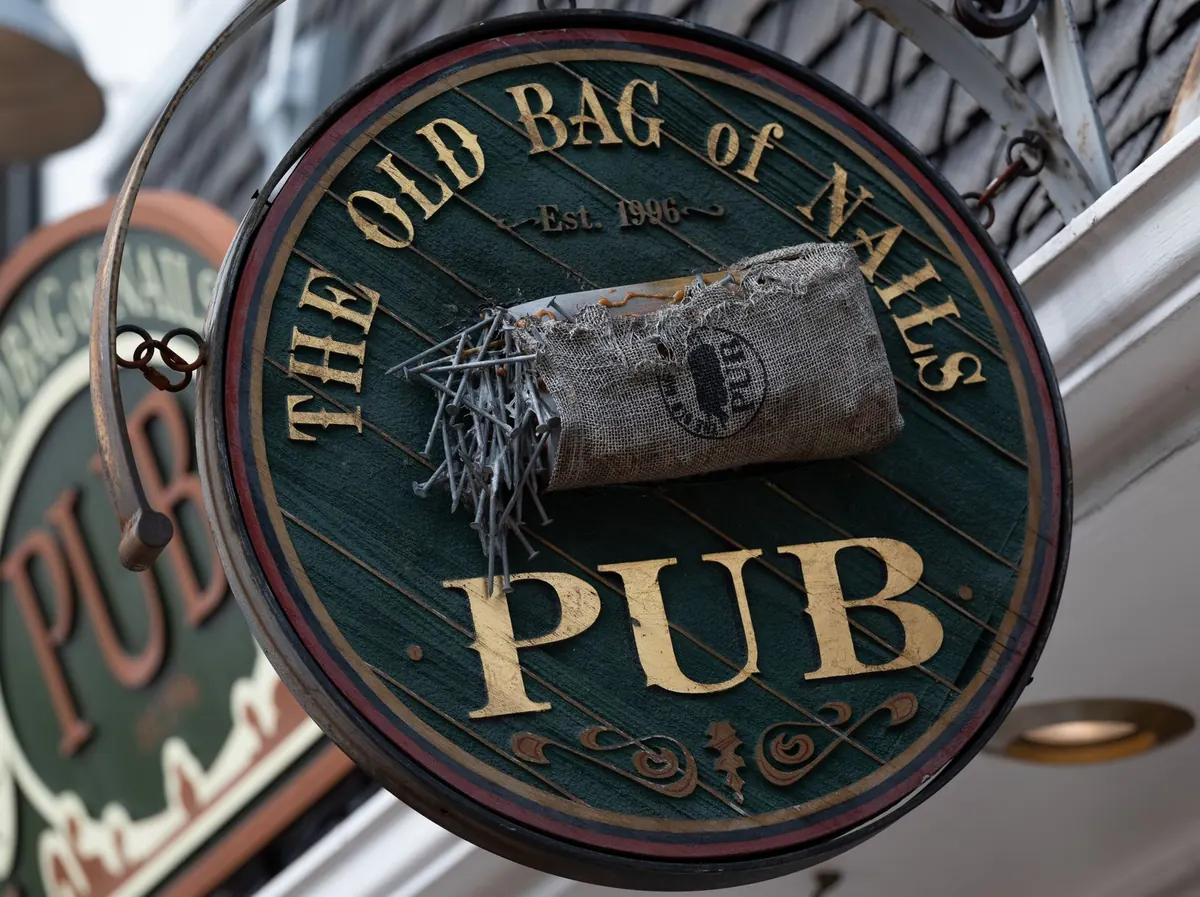
The board above a pub door does two jobs at once. It tells you where to drink, and it tells you who once owned the land, the loyalty and the argument. Long before most customers could read a name, they could read a picture: a lion, a crown, a pair of crossed keys. Those pictures stayed on the sign long after the politics that put them there went out of fashion. That is why a village pub in Norfolk and a back-street bar in Manchester can carry the same name, both referring to a battle fought in 1651.
Before Words, There Was a Bush
Roman wine sellers hung vine leaves outside their premises, and the idea survived the Empire. Medieval alehouses used an ale stake — a pole pushed through a bush or a bundle of greenery and set by the door. The saying "good wine needs no bush" comes from exactly this habit, and it was written down by Shakespeare's time as a joke about people who oversold their cellar.
A statute of 1393, under Richard II, is usually credited with requiring alehouses to display a sign. The official reason was practical rather than decorative: the local ale-taster needed to find the premises to check the strength and the price of the brew. Travellers needed the same thing. An inn without a mark was useless to a stranger arriving after dark. So the sign became a form of public infrastructure, and the name became the address.
The Red Lion: Heraldry on the High Street
The Red Lion is the most common pub name in Britain, and its success has nothing to do with lions. A red lion rampant on a gold field was the badge of John of Gaunt and the House of Lancaster, and later a motif associated with the Scottish royal arms and with James I and VI. When a landlord painted it up, he was borrowing someone else's power. A sign showing the local lord's arms announced that the premises had a patron, and that a traveller under that roof was under that protection.
Heraldry had a grammar, and pub painters rarely respected it. A lion rampant rears upright; passant walks; couchant lies down with its head up. The correct Red Lion is red, rampant and on gold. Plenty of surviving signs show a blue lion, a brown lion, or a lion lying about like a dog on a rug. The name held; the heraldry drifted.
Crowns, Roses and Regime Change
Royal names are a record of who was in charge when the paint was still wet. The Crown, the King's Head and the Queen's Head are obvious enough, but the interesting ones are the survivors. The Royal Oak commemorates Charles II hiding in an oak tree at Boscobel after the Battle of Worcester in 1651. The name became popular — and safe — after the Restoration in 1660, when celebrating the king stopped being a risk.
The Rose and Crown is generally read as the union of the houses of Lancaster and York, the red and white roses joined under the Tudors. The Cavalier and the Roundhead appeared as opposing loyalties hardened. When the political weather turned, landlords repainted rather than rebuilt: a crown added, a head painted over, a saint quietly turned into something less Catholic. The sign was the cheapest piece of spin a pub ever owned.
The Bull is a good example of how slippery this gets. It may be a heraldic beast belonging to a local family, or it may be a sly reference to a papal bull — a Protestant jab dressed as a farm animal. Both readings have been offered, and the ambiguity is part of the charm.
Angels, Cross Keys and the Church's Long Shadow
Religious names are everywhere once you start looking. The Cross Keys refers to Saint Peter and the keys of heaven. The Angel is often the Annunciation, and also the sign of a religious house that once owned the site. The Lamb and Flag is the Agnus Dei, the lamb of God, tied to Saint John the Baptist. The Three Kings points to the Magi. The Mitre and the Bishop speak for themselves.
Some names travelled sideways. The Ship has been linked to Noah's ark, to the wine trade and to coastal commerce, depending on which port you are standing in. The Bell may be the church bell that called the parish, the bell that opened a market, or a foundry's mark. When a name has three plausible origins, the honest answer is usually that the locals stopped caring which one was true.
Trades, Beasts and the Working Week
A large family of pub names records not who ruled but who worked. These signs told a travelling smith or a wool merchant where his trade was welcome, and they doubled as an address for a workshop yard behind the building.
- The Plough and the Wheel — farming and carting; common at the edge of a village where the road met the fields.
- The Fleece and the Woolpack — the wool trade, the money behind a lot of medieval church building in the Cotswolds and East Anglia.
- The Nag's Head — a nag was an ordinary riding horse, so this is a travel sign, not a compliment.
- The Dog and Duck — a pond used for hunting duck with dogs. The pub was once part of the entertainment, not just the refreshment.
- The Fox and Hounds, the Hare and Hounds — hunting country, marked on the map for anyone riding out.
- The Chequers — often explained as the chequered cloth of the Exchequer, a nod to tax collecting and money changing. It may also be a family arms. Both are worth repeating at the bar.
- The Bricklayer's Arms, the Masons' Arms — a trade's own local. The suffix Arms signals heraldry, while Head usually signals a portrait.
Watch the difference between Arms and Head. A pub called the So-and-So Arms is flying someone's coat of arms. One called the So-and-So Head is showing you a face, usually a monarch, a duke or a landlord who paid for the rebuilding.
How to Read a Sign in Two Minutes
Next time you are waiting for a pint, spend a minute on the board outside. It is not a legal document and it is not always honest — pubs rename, rebrand and repaint — but it is a decent set of clues.
- Look at the picture before the words. The image is usually older than the name, and it survives repainting better than the lettering does.
- Check the picture against the name. A green lion, a blue boar or a crown on its side tells you the painter was working from memory.
- Look for layers. Flaking paint often reveals an earlier sign underneath — a different animal, an older brewery name, a date.
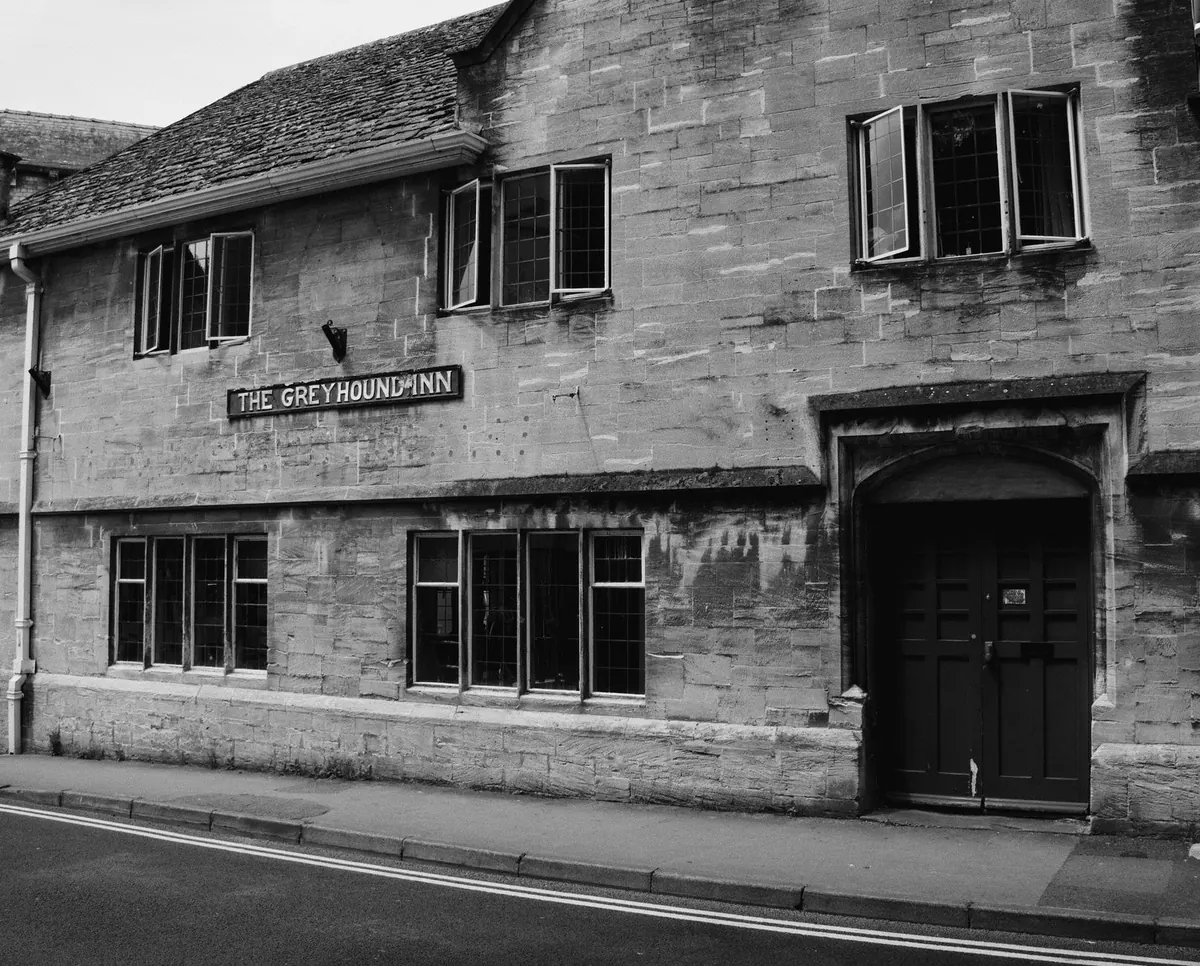
- Read the building. A coaching arch, a mounting block, stables or a wide yard behind the pub are worth more than the name for dating the place.
- Be suspicious of "Ye Olde". That Y is a printer's stand-in for the old letter thorn, and most "olde" spellings on pub fronts are Victorian or later affectations.
- Ask at the bar. Landlords usually know the local version, and the local version is often better than the official one.
Treat the sign as a clue rather than a certificate. Then order something, sit near a window, and look up. Someone had to carry that board up a ladder, and the reason they chose a lion over a crown is a small piece of history you have just read for free.
Photo: Chris F / Pexels